
G1 Business conduct
Material impacts, risks and opportunities and their interaction with strategy and business model
Impacts, risks and opportunities (IROs)
| Location in the value chain | Time horizon | ||||||
| Upstream | Own operations | Downstream | Short-term | Medium-term | Long-term | ||
| Responsible business conduct through fair and ethical business practices | Actual negative impact | ⚫ | ⚫ | ||||
| Continued corruption, bribery and facilitation | Potential negative impact | ⚫ | ⚫ | ⚫ | ⚫ | ||
| Political engagement can support maritime sector decabornisation | Potential positive impact | ⚫ | ⚫ | ⚫ | ⚫ | ⚫ | |
| Protection of whistleblowers | Potential negative impact | ⚫ | ⚫ | ⚫ | ⚫ | ||
Corporate culture and business conduct policies
Promoting the culture of compliance, ethics, and integrity
Höegh Autoliners is committed to embedding fair and ethical business practices across all operations, fostering a culture of compliance, integrity, and transparency. This commitment is reinforced through robust business conduct policies, clear leadership communication, and mandatory Code of Conduct training for all employees, covering key areas such as anti-corruption and regulatory compliance. By integrating these measures, we strive to deliver the highest quality service to our customers and stakeholders while ensuring adherence to laws and international standards, upholding human rights, and driving sustainable value creation throughout our value chain.
The Board of Directors is responsible for the governance of Höegh Autoliners. This means that the strategic direction and oversight emanate from the Board, ensuring the company’s activities are organized prudently in accordance with its purpose, strategic goals, core values, and compliance framework.
The Audit Committee acts as a preparatory working committee and supports the Board’s supervisory roles with respect to financial reporting and the effectiveness of the Company’s internal control and risk management systems including compliance.
The Executive Management team of Höegh Autoliners is responsible for the day-to-day operations of the company, implementing the Code of Conduct, and fostering a culture of integrity.
The Legal Department oversees the implementation of the company’s compliance program, including its Anti-Corruption Policy and Whistleblowing system. Leaders of local offices are appointed as Compliance Ambassadors, serving as local resources for compliance-related communication and coordinating activities between their respective offices and the Legal Department.

The Code of Conduct
Our “Code of Conduct” is the heart of how we do things at Höegh Autoliners and combines our values, behaviours, way of working and culture. The Code underpins our commitment to behave in a manner consistent with our values. In other words – it is our moral compass when we are challenged, are in difficult circumstances or face uncertainty.
Our Code of Conduct states how all employees shall act to comply with our values, standards, and commitments. These include, among others, our policy against bribery and corruption, our whistleblowing system, and our relationship with our suppliers. Responsibility for policy development and implementation is owned jointly by the Chief Legal Officer and the Chief Strategy, People and Digital Officer. The policy is applicable to all employees in the HA group and is accessible to all employees via the internal document management system.
The Code of Conduct was reviewed and updated in 2025. The update strengthens commitments to dignity, safety, human rights, sustainability, responsible contributions, and intellectual property, while adding clearer guidance throughout. It also introduces a new section on digital ethics, data privacy, cybersecurity, and responsible AI use.
Whistleblowing policy
Speaking up is a crucial aspect of our compliance program. To encourage the reporting of misconduct, we have established an anonymous whistleblowing system hosted by a third-party online platform. The system is accessible to both employees and external stakeholders, specifically for reporting concerns related to ethics and integrity.
We work actively to enhance awareness of the importance of speaking up, and to communicate that the whistleblowing channel is available to all employees. A link to the whistleblowing platform is available on both Höegh Autoliners’ external webpage and intranet, and trainings are provided during onboarding through Attensi and recurrently highlighted during Integrity Day.
Incidents reported on our Whistleblowing system are evaluated and investigated by our Legal Department and Human Resources. Our Whistleblowing Policy ensures the availability of reporting anonymously and protects the whistleblowers from retaliation for raising concerns and violations. In line with that, our policy assures that there will not be any disciplinary action against notifiers.
While no specific training programme is in place exclusively for handling whistleblower reports, the Legal and HR department staff receive relevant exposure through our broader legal and compliance training programs. These trainings cover the principles, procedures and expectations applicable when handling concerns raised through our reporting channels.
Policy development and implementation is overseen by the Chief Strategy, People and Digital Officer, and it is accessible to all employees via our internal document management system.
Höegh Autoliners Supplier Code of Conduct
Consistent with its commitment, Höegh Autoliners expects the same ethical standard from its suppliers and subcontractors. This expectation is communicated through our “Supplier Code of Conduct” (SCC) , which we require suppliers to sign and adhere to, ensuring compliance with our sustainability requirements and reflecting our dedication to ethical practices. The SCC was reviewed and updated in 2025. Policy development and implementation are overseen by the Chief Executive Officer, and it is accessible to all employees via our internal document management system and our website.
We show our commitment to compliance by carefully evaluating all new business partners and entities we engage with.
Our supplier registration procedure, standardized across the organization in 2024, is now fully embedded and operational. Before onboarding any new supplier, we conduct a comprehensive third-party sanction screening to evaluate key criteria, including regulatory compliance, trade sanctions, and ethical standards. In addition, suppliers must sign our SCC, confirming their commitment to responsible business practices. This structured process ensures transparency, mitigates risk, and upholds both regulatory obligations and ethical principles across our supply chain.
Moreover, the SCC is translated into selected languages to facilitate clear understanding of and adherence to the code by suppliers across different regions.
Training and awareness
Höegh Autoliners promotes a strong culture of ethics and compliance through mandatory training on our Code of Conduct, covering key topics such as anti-corruption and other compliance areas. To engage employees across the organization, we have introduced a gamified training program via the Attensi app, accessible on mobile devices, making learning interactive and enjoyable. This platform encourages employees to explore critical compliance topics through game-based activities. In addition, we host an annual Integrity Day across all global offices, facilitated by Compliance Ambassadors, featuring workshops and discussions that reinforce the importance of ethics and integrity in our business practices.
Prevention and detection of corruption and bribery
Zero-tolerance policy towards corruption
Höegh Autoliners is committed to the principles of the UN Convention Against Corruption (UNCAC) and maintains a zero-tolerance policy towards corruption, bribery, and facilitation payments, as outlined in our Group-wide Anti-corruption Manual. We ensure our policies and processes comply with Norwegian anti-corruption laws, as well as other relevant international legislation, including the UK Bribery Act, the US Foreign Corrupt Practices Act, and local laws in the regions where we operate.
Höegh Autoliners recognizes the importance of collaborative efforts across industries, governments, and civil society as essential to achieve the profound change required to combat corruption effectively. Höegh Autoliners is a co-founder member of the Maritime Anti-Corruption Network (MACN) and continues to participate in initiatives aimed at reducing corruption in maritime trade, including providing data of corrupt demands in ports, providing training to our crew and employees, and implementing a “Say No!” campaign. Through MACN, we engage in sharing best practices, raising awareness, and supporting transparent business conduct across the sector.
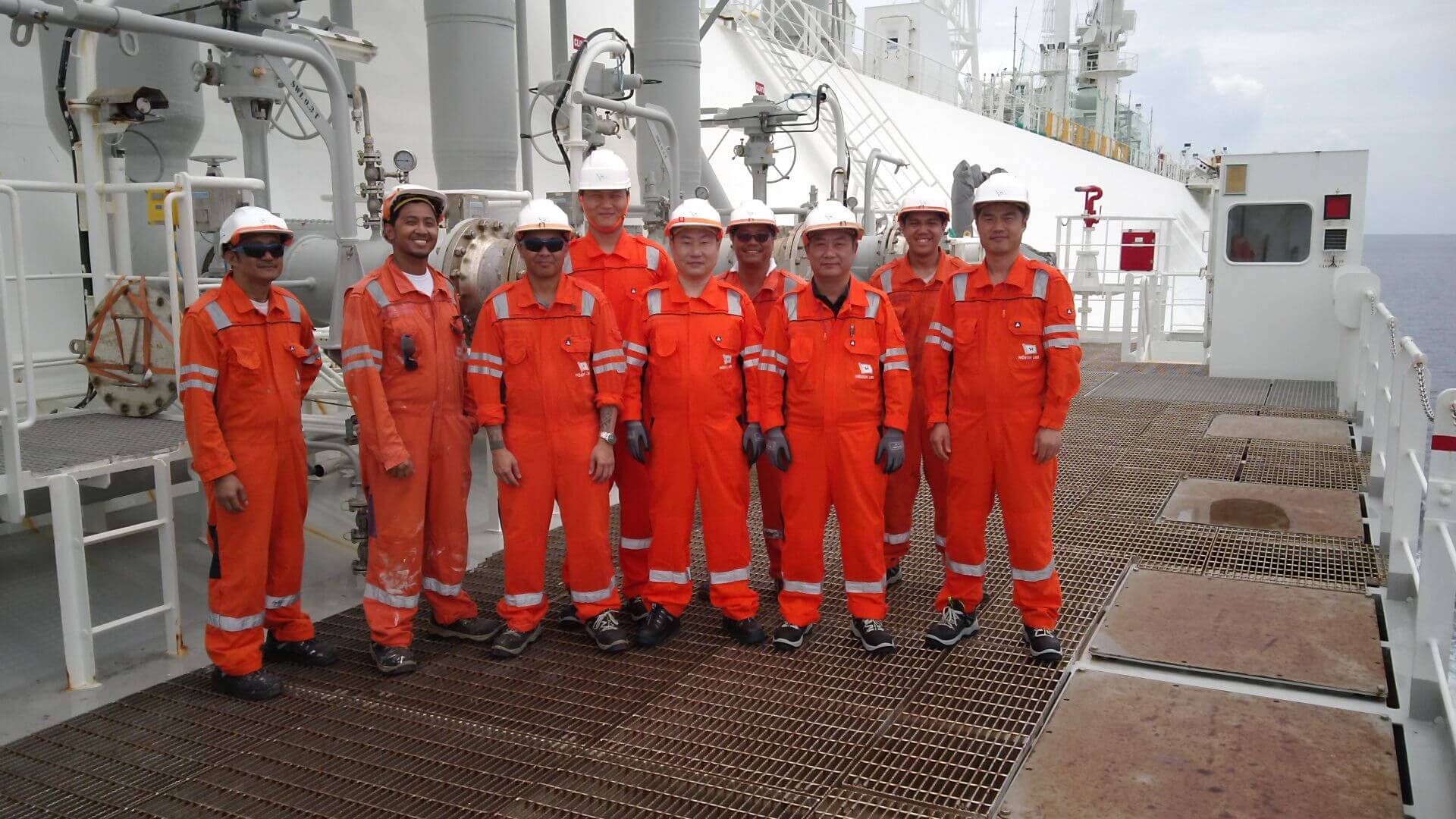
Over the past years, we have strengthened our anti-bribery and anti-facilitation measures onboard all vessels by prominently displaying anti-corruption posters in strategic locations where authorities are received during inspections. Alongside our long-standing “Say No!” campaign, we reinforced our commitment to crew safety through extensive capacity-building sessions and training programs designed to equip them with the skills to effectively resist corrupt demands.
Incidents of corrupt demands or corruption incidents are reported via Höegh Autoliners’ Improvement System (HIS). All crew and employees are encouraged to report facilitation payment demands and or gifts and exchanges. All information sent through HIS are managed and evaluated by the Legal Department based on our Anti-Corruption policy by individuals separate from the chain of management involved in the matter. Incidents are regularly communicated to both the management team and the Board of Directors.
Policy development and implementation is overseen by Chief Legal Officer, and it is accessible to all employees via our internal document management.
Anti-corruption training
Höegh Autoliners requires all employees, including all members of the executive management team, to complete mandatory code of conduct training, which includes anti-corruption training through our learning management system. Our seafarers are also provided with training on anti-corruption which includes concepts of corruption, our zero-tolerance policy, and procedure for prevention and reporting incidents.
Our anti-corruption training program covers legal requirements, policies and procedures, as well as practical scenarios to help employees recognize and address potential corruption or bribery situations.
In 2025 65.6% of our seafarers successfully completed anti-corruption training, compared to 63% in 2024.
They are required to complete this anti-corruption training every second year. Our seafarers are considered functions-at-risk of corruption demands ranging from bribery to facilitation payments.

Accounting policies - Anti-corruption training
Anti-corruption training:
Höegh Autoliners provides a set of mandatory training courses to its employees. The trainings are related to our Code of Conduct, including anti-corruption. Completion data is recorded in Höegh Autoliners' internal learning platform.
Function-at-risk:
Höegh Autoliners’ seafarers are determined to be most at risk for bribery and corruption.
Confirmed incidents of corruption or bribery
In 2025, we received eight (8) reports through HIS of demands for bribes or facilitation from our fleet, compared to six (6) in 2024. These demands varied, including requests for cigarettes, crew provisions, and even cash. Our crew consistently responded by politely rejecting these demands, citing our zero-tolerance policy towards corruption. There is a risk that seafarers are underreporting incidents. Therefore, we have throughout the year issued guidelines to vessel masters visiting ports where the MACN Local HelpDesk is available. Additionally, we updated the onboard Computer-Based Training on Anti-Corruption to include the latest strategies for effectively combating bribery and facilitation payment demands.
Höegh Autoliners did not receive any convictions or fines for violations of anti-corruption or anti-bribery law in 2025, nor has it been subject to any legal action relating to corruption and bribery.
Accounting policies - Incidents of corruption or bribery
Demands for bribes or facilitation payments corresponds to the actual number demands for bribes and/or facilitation payments reported through HIS.
Number of convictions for violation of anti-corruption and anti-bribery laws
refers to the number of convictions for violation of anti-corruption and anti-bribery laws, considering all convictions resulting from legal proceedings against any entity within the Höegh Autoliners Group in the reporting year.
Amount of fines for violation of anti-corruption and anti-bribery laws relates to the amount of fines for violation of anti-corruption and anti-bribery laws, considering all convictions resulting from legal proceedings against any entity within the Höegh Autoliners Group in the reporting year.
Political influence and lobbying activities
During the 2025 financial year, Höegh Autoliners has advocated for a regulatory framework that ensures a global level-playing field and supports first mover efforts in their efforts to decarbonise shipping. By pushing for this, the company seeks to ensure that shipping can decarbonise in line with the IMO target of net-zero by 2050.
Our efforts include engaging with international regulatory bodies, participating in industry coalitions, and collaborating with governments to shape policies that support sustainable shipping practices. These initiatives are designed to incentivize the long-term adoption of green technologies and reduce the overall carbon footprint of the shipping industry. Through these efforts, the company aims to drive systemic change that benefits both the climate and the environment as well as the industry’s long-term viability. The Chief Operating Officer is responsible for the oversight of these activities.
Currently, there is no specific policy in place regarding political engagement. However, our code of conduct addresses political contributions, emphasizing that special caution must be exercised when evaluating such contributions. Such contributions must comply with public disclosure requirements and be reported according to internal processes.
The company is registered in the EU Transparency Register (registration number 971383591538-27) and the German Transparency Register (registration number R007089).
No financial or in-kind political contributions have been made during the reporting year, and no members of the company’s management team or Board of Directors held comparable positions in any public administration in the two years preceding their appointment in the current reporting period.
Accounting policies - Political engagement
Financial contributions refers to political contributions in which financial support is provided directly to political parties, their elected representatives or persons seeking political office. ‘Financial contributions’ can include donations, loans, sponsorships, advance payments for services, or other similar practices.
In-kind political contributions refers to political contributions in which financial or in-kind support were provided directly to political parties, their elected representatives or persons seeking political office. ‘In-kind contributions’ can include advertising use of facilities, design and printing, donation of equipment, provision of board membership, employment or consultancy work for elected politicians or candidates for officer.
